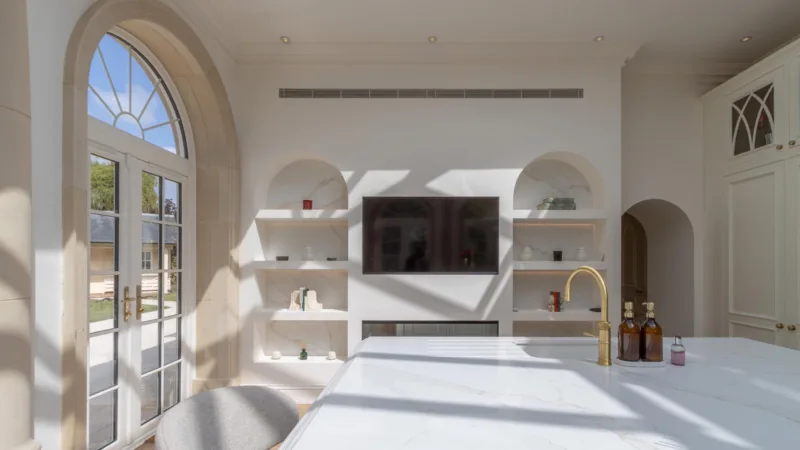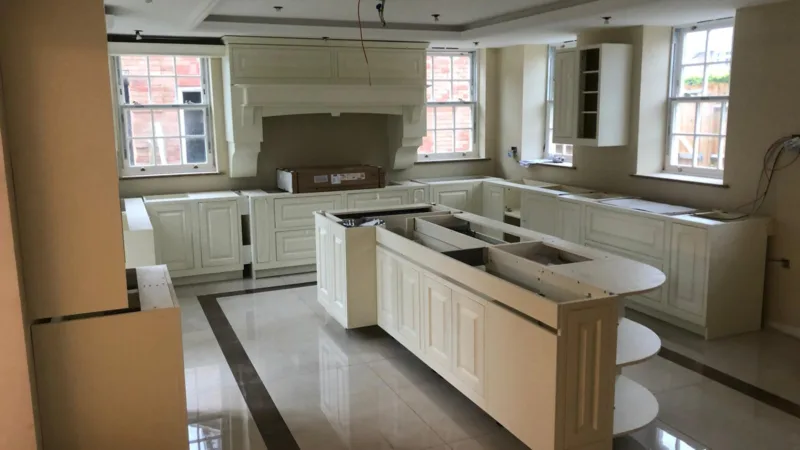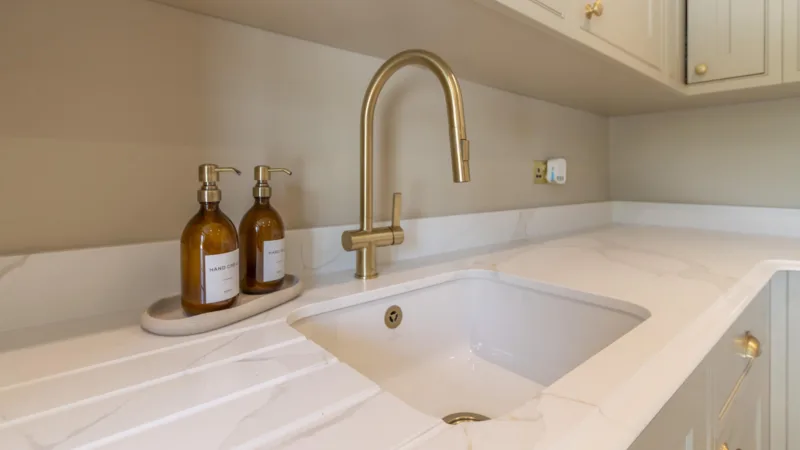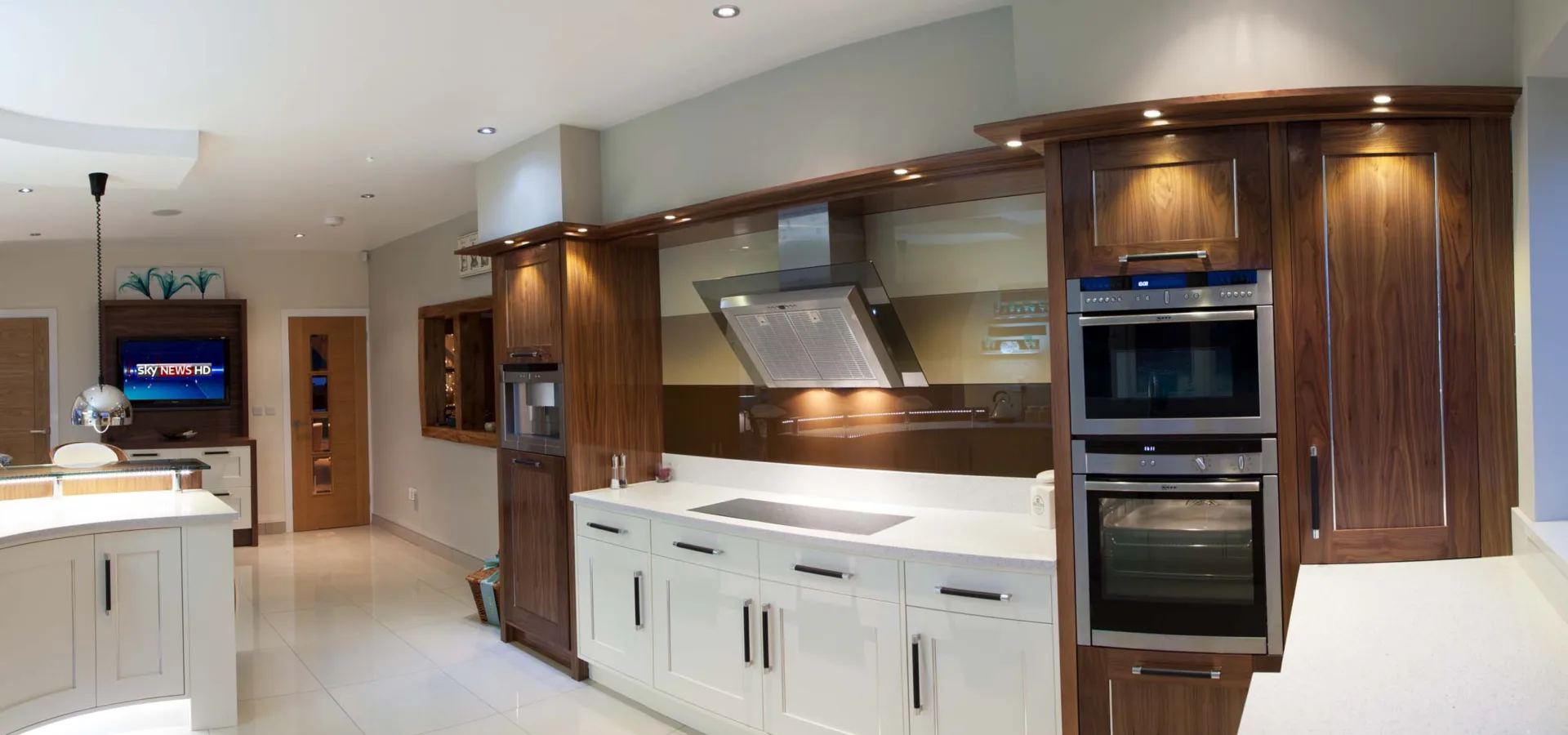
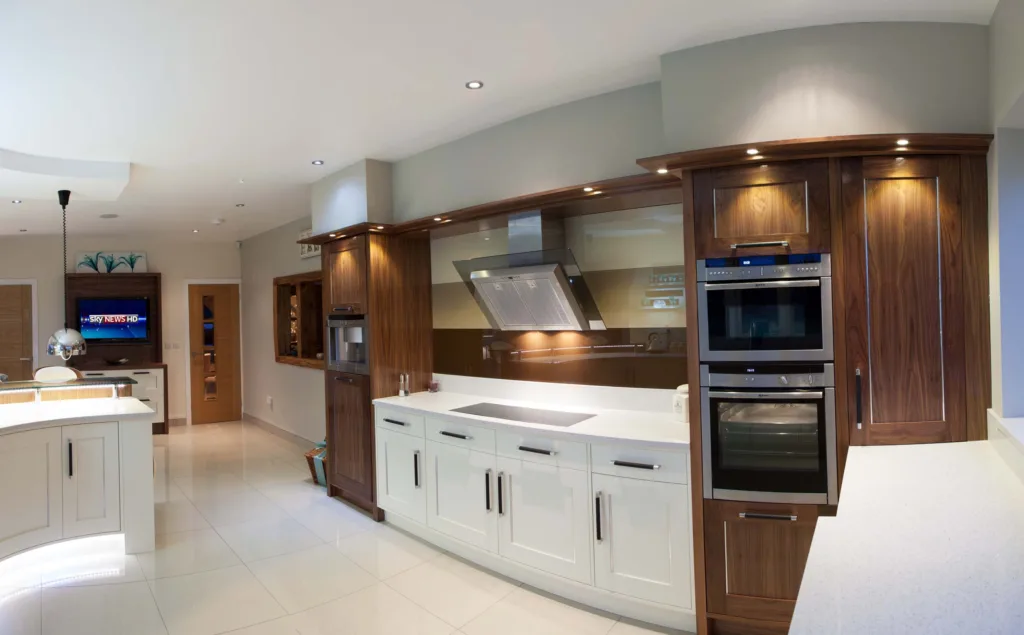
Of all the decisions in a kitchen project, the door style is the one that sets the character of the room. It is the first thing anyone notices, it is what you look at every day, and it accounts for a meaningful share of the cost.
Clients often arrive with a picture on their phone and no vocabulary for what they are looking at. So here is a plain explanation of the main options and what each is actually like to live with.
Shaker
A five-piece door with a recessed flat centre panel. It is the most popular style in Britain by a distance, and for good reason: it sits comfortably in a Victorian terrace, a nineteen-thirties semi or a new build without ever looking out of place.
Shaker is forgiving. It takes paint beautifully, works with almost any handle, and does not date in the way more fashionable profiles do. If you are nervous about committing, this is the safe choice — and safe here means you will still like it in fifteen years.
The only mild drawback is the ledge where the frame meets the panel, which does collect a little dust. A wipe when you clean is all it needs.
In-frame
Here the door sits inside the cabinet frame rather than over the front of it, exactly as a piece of fine furniture would be made. It is the most traditional construction and the most demanding to produce.
The result is unmistakable. You see a slim reveal of painted frame around every door, the shadow lines are crisp, and the whole run reads as joinery rather than cabinetry. In a period property it is hard to beat.
It costs more, and it is worth understanding why. The tolerances are tighter, there is more timber, and it takes real skill to make the gaps consistent across a long run. You also lose a little internal space to the frame. For the right house, it is money well spent.
Handleless
No handles at all — either a J-pull profile routed into the top of the door, or a recessed channel in the carcass, or true push-to-open. The look is calm, architectural and uninterrupted.
It suits contemporary rooms and open-plan spaces particularly well, because with nothing projecting from the fronts the kitchen recedes and reads almost like furniture. It is also wonderfully easy to clean, with nothing to catch a sleeve on.
Two things to know. True push-to-open mechanisms can be frustrating if someone in the house has limited hand strength, in which case a J-pull is the better compromise. And because there is no handle to distract the eye, the quality of the gaps between doors becomes very visible — this is a style that rewards good making and punishes poor making.
Can you mix them?
Yes, and some of our favourite kitchens do. A classic in-frame run along the wall with a handleless island. Painted shaker paired with a timber island. Mixing works when one style clearly leads and the other supports — problems arise when the room cannot decide which it is.
How to choose
Start with the house rather than the magazine. A handleless gloss kitchen in a beamed cottage fights the building; in-frame joinery in a minimal new build can look fussy. The kitchens that feel right are nearly always the ones that agree with the architecture around them.
Then think about who lives there. Small children and gloss fronts are a combination that shows every fingerprint. A busy family kitchen may be happier with a painted matt finish that can be touched in.
Finally, see them full size. A sample door tells you very little — a whole run tells you everything. We have all three styles in full-height displays at our Basildon showroom.
Once the style is settled, the next decision is usually the surface. Our guide to choosing a kitchen worktop covers that, or you can book a design consultation and we will work through it with you.