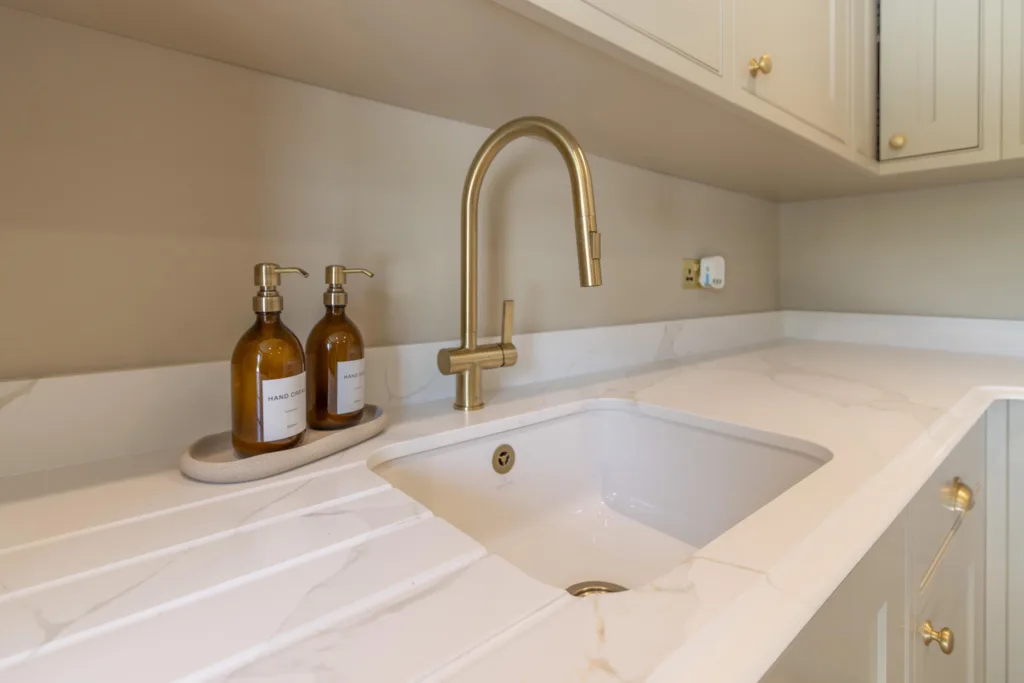
The worktop is the part of the kitchen you touch every single day. It is also the line in the quote that moves most, and the decision clients find hardest.
Showroom samples do not help as much as you would hope — a 100mm square tells you very little about how a material behaves across four metres, or how it will look in three years. So here is a straight comparison, based on what we see coming back to us.
Quartz
Engineered from natural quartz bound with resin. It is the most popular choice in our Basildon showroom and, for most households, the sensible one.
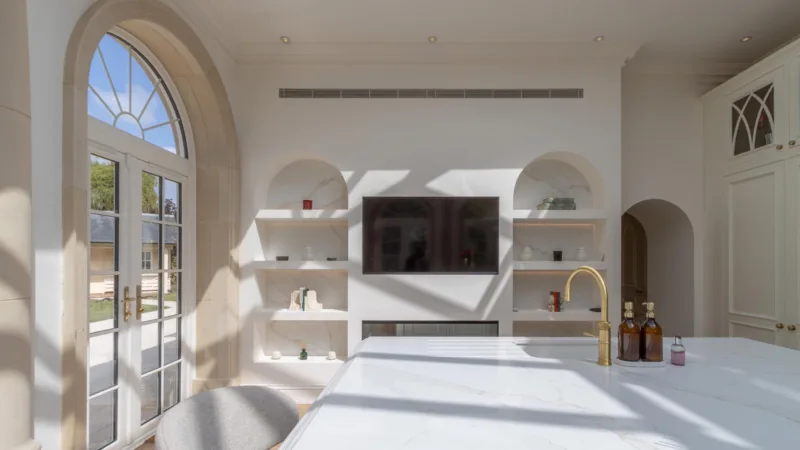
It is non-porous, so it does not need sealing and will shrug off red wine, olive oil and turmeric. Colour and pattern are consistent, which matters if you have a long run or an island and want the joins to disappear. Modern veined quartzes imitate marble convincingly without the anxiety.
The limitations are worth knowing. It does not like heat — always use a trivet, because a hot pan straight from the oven can mark the resin permanently. And in very bright direct sunlight some colours can shift over many years.
Granite
A natural stone, properly tough, and still unbeaten for sheer durability. It handles heat far better than quartz and takes the day-to-day battering of a busy family kitchen without complaint.
Because it is natural, every slab differs. That is either the charm or the problem, depending on your temperament — you should always view the actual slab rather than a sample. It is porous, so it needs sealing, though a modern sealer lasts years rather than months.
Marble and natural stone
Nothing else looks like marble. The depth and movement in a good slab is genuinely beautiful, and no engineered surface quite replicates it.
It is also the most demanding surface in this list. It is soft, it is porous, and it etches — a splash of lemon juice or vinegar left on the surface will dull the polish, and that is a chemical reaction rather than a stain you can scrub out.
Our honest advice: marble is wonderful for a pantry top, an island used mainly for serving, or a bathroom. For the main prep run in a kitchen where three people cook, you need to genuinely love patina. Many people do — it just should not come as a surprise.
Timber
Warm, tactile, and the only material on this list you can repair. Scratches and marks sand out, and a worktop that looks tired can be brought back to life in an afternoon.
It needs oiling, particularly in the first few months, and it does not want standing water — the areas around the sink and dishwasher need care. It pairs beautifully with painted cabinetry, and a timber breakfast bar alongside a stone prep area gives you the best of both.
Details that matter more than material
Edge profile. A slim 20mm edge reads modern; a chunky 40mm or 60mm mitred edge feels substantial and suits a classic kitchen. It changes the character of the room more than people expect.
Where the joins fall. On a long run or an island, a well-placed join is almost invisible and a badly placed one is all you will see. Worth asking about at design stage.
Upstands and splashbacks. Running the same material up the wall behind the hob looks considered and is far easier to wipe down than a grouted tile.
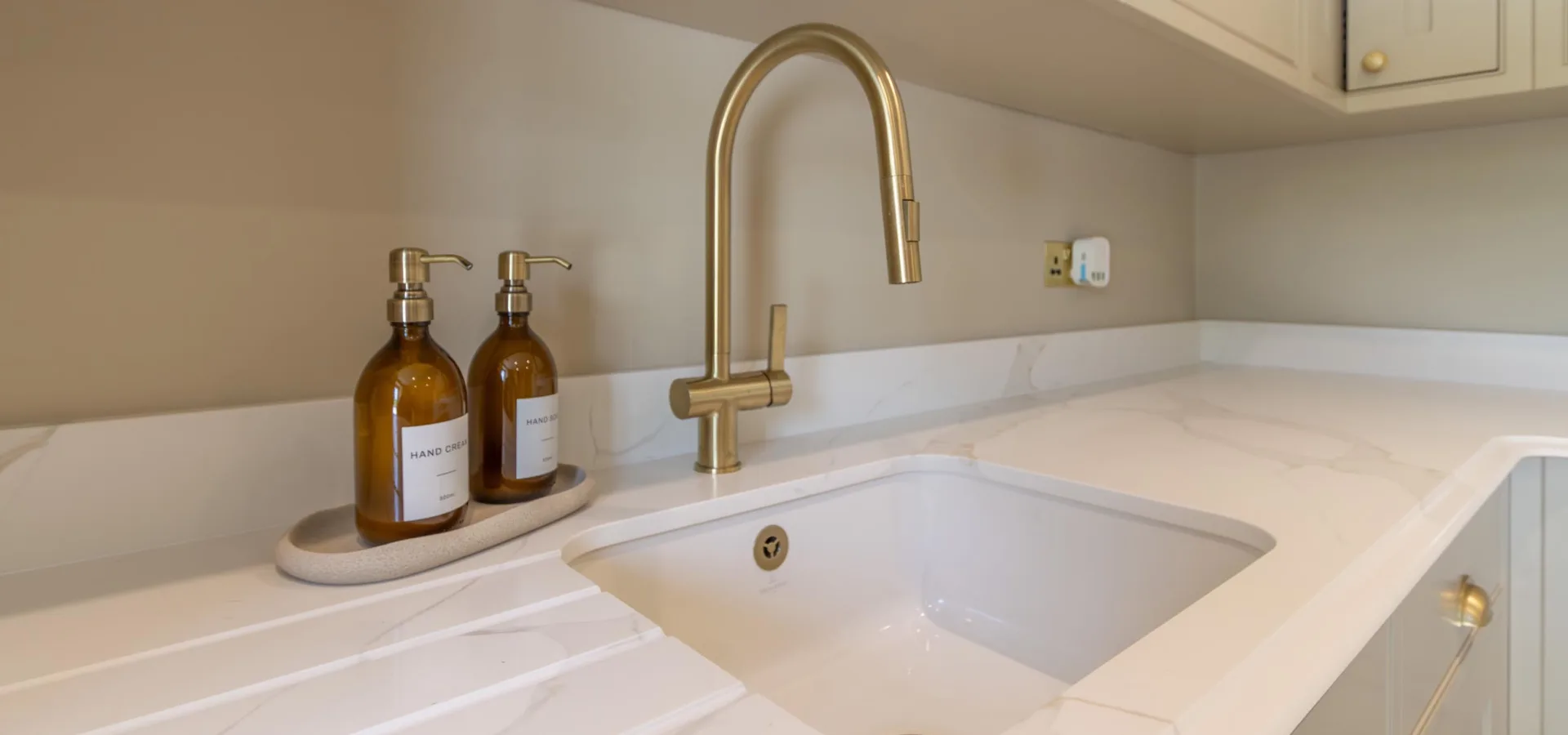
The sink. An undermount sink in a solid surface is easy to sweep crumbs into and looks clean. It is only possible in the harder materials.
So which should you choose?
If you want to fit it and forget it, quartz. If you are hard on a kitchen and cook constantly, granite. If you want beauty above all and accept the upkeep, natural stone. If you want warmth, and like the idea of a surface that ages rather than wears out, timber.
Come and run your hand across them. We have all of these in full-size runs at our Basildon showroom, which tells you far more than a sample ever will. Browse our bespoke kitchens or book a design consultation.