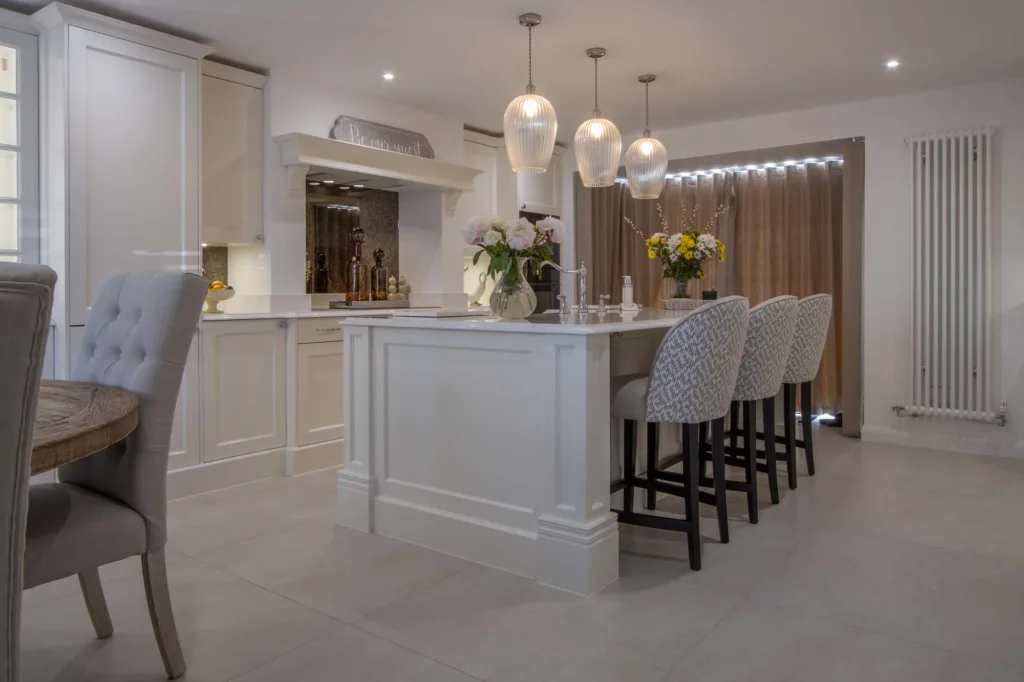
It is the question most people want to ask first and feel slightly awkward raising. How much is this going to cost? After thirty-five years of designing kitchens across Essex, we would far rather you asked at the start than found out at the end.
The honest answer is that there is no price list, and anyone who hands you one is selling you something other than a bespoke kitchen. But that does not mean the number is a mystery. Here is what actually moves it.
Why there is no single price
A bespoke kitchen is made for one room and one household. Two kitchens of identical size can differ enormously in price depending on how they are built, what they are finished in, and what goes inside them. A compact galley with beautifully made cabinetry can cost more than a large kitchen built from stock units — and be the better buy.
What you are really choosing is a level of specification. Once that is settled, the price becomes predictable very quickly.
Where the money actually goes
The cabinetry itself. This is the part people underestimate. Solid, well-made carcasses with proper backs, quality hinges and soft-close runners cost more than flat-pack and last decades longer. It is the single biggest difference between a kitchen that still feels tight in fifteen years and one that does not.
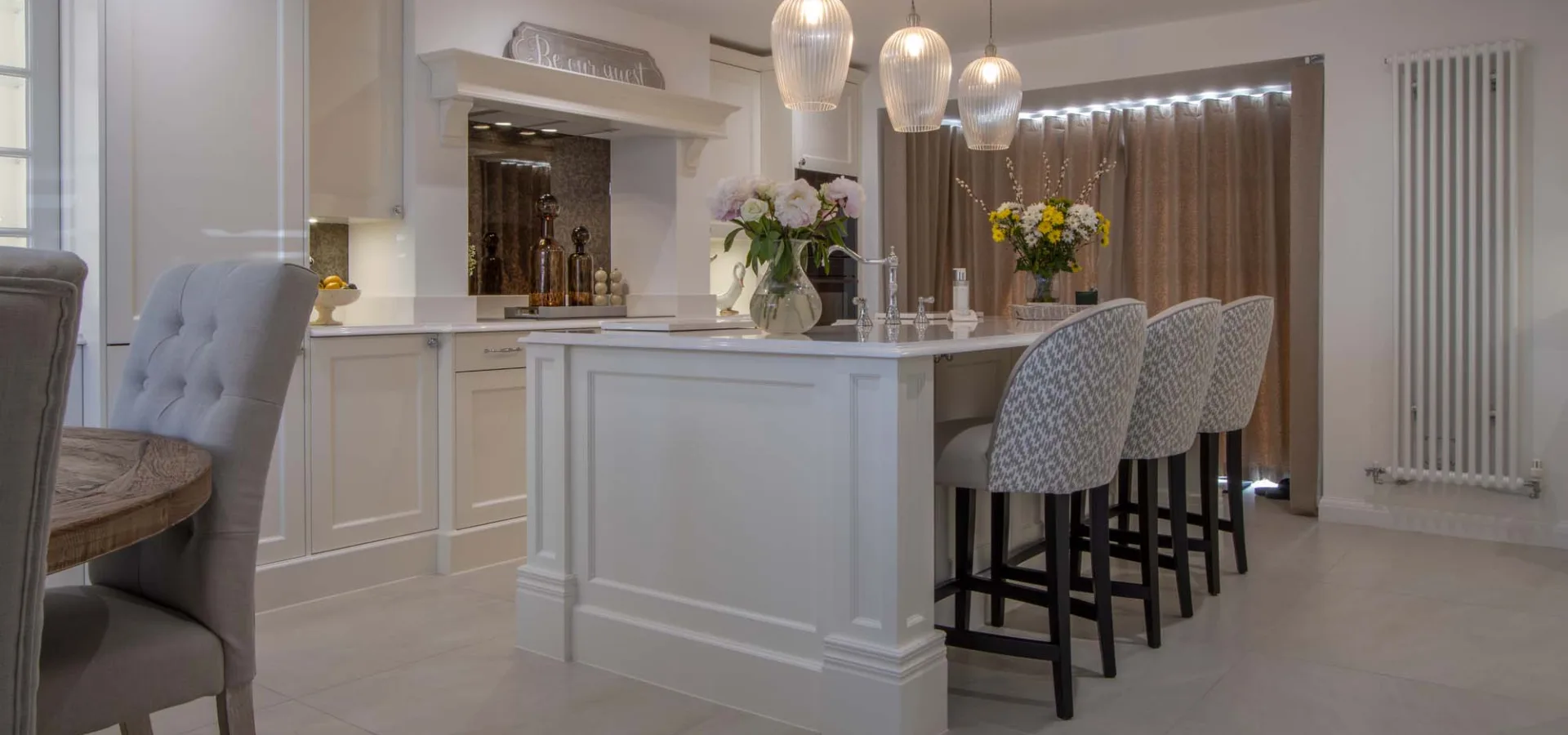
Doors and finish. A hand-painted in-frame door involves far more work than a sprayed slab door, and the price reflects it. Neither is better — they are different looks — but the construction behind them is where the cost sits.
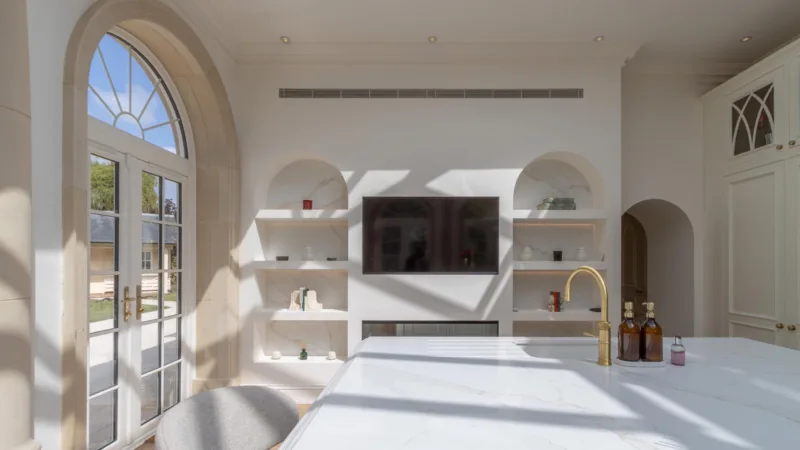
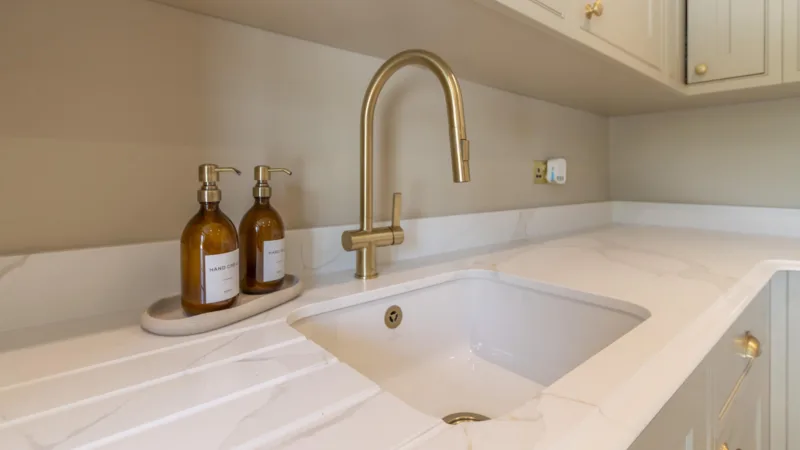
Worktops. Easily the most variable line in any quote. The same kitchen can swing considerably depending on whether you choose a hard-wearing quartz, a natural stone with movement and character, or timber. It is worth reading our guide to choosing a worktop before you decide.
Appliances. Entirely within your control, and the easiest place to flex. A boiling-water tap, a wine cabinet and a built-in coffee machine are wonderful things, but they are choices rather than necessities.
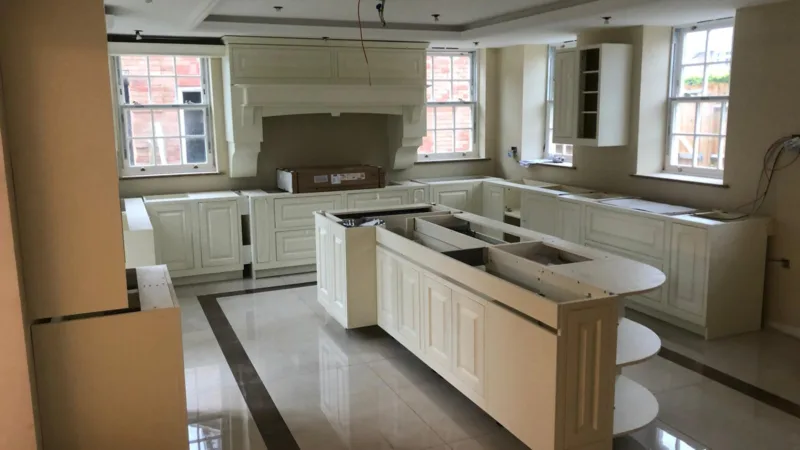
Installation. Good fitting is not a line to trim. Scribing cabinetry into a period property with walls that are nowhere near square takes skill and time, and it is the difference between a kitchen that looks made-to-measure and one that looks placed.
The choices that move the price most
In our experience, four decisions account for most of the variation: the door style and finish, the worktop material, the appliance package, and how much bespoke joinery you want — larders with bi-fold doors, curved ends, integrated seating and so on.
Interestingly, size matters less than people expect. Adding a run of tall units costs less than you might think. Changing a worktop from quartz to a rare natural marble can cost a great deal more.
How to set a budget that holds
Decide a figure you are genuinely comfortable with before you fall in love with anything. Tell your designer what it is. A good designer will not spend it all on day one — they will show you where it buys the most, and where you can economise without regret.
Our advice is nearly always the same: spend on the things you cannot change later. Cabinetry, layout and the quality of the fit are permanent. Handles, taps and even appliances can be upgraded in time.
Build in a contingency of around ten per cent. Older Essex properties in particular have a habit of revealing something once the old kitchen comes out.
Getting a real number
The only way to get an accurate figure is a proper design conversation — the room, how you cook, how you live in it, and what you want it to feel like. That takes an hour or so, costs nothing, and it is far more useful than a ballpark plucked from the air.
Come and see the work in person first. There are more than eighteen full-size displays at our Basildon showroom, which is the quickest way to understand what different specifications actually feel like. Then book a design consultation and we will give you a straight answer.