Ask most people whether they want sliding or hinged wardrobe doors and they will answer with a look they like. That is a fair place to start, but the room usually has the casting vote. Here is what we weigh up when we design fitted wardrobes.
Start with the floor in front
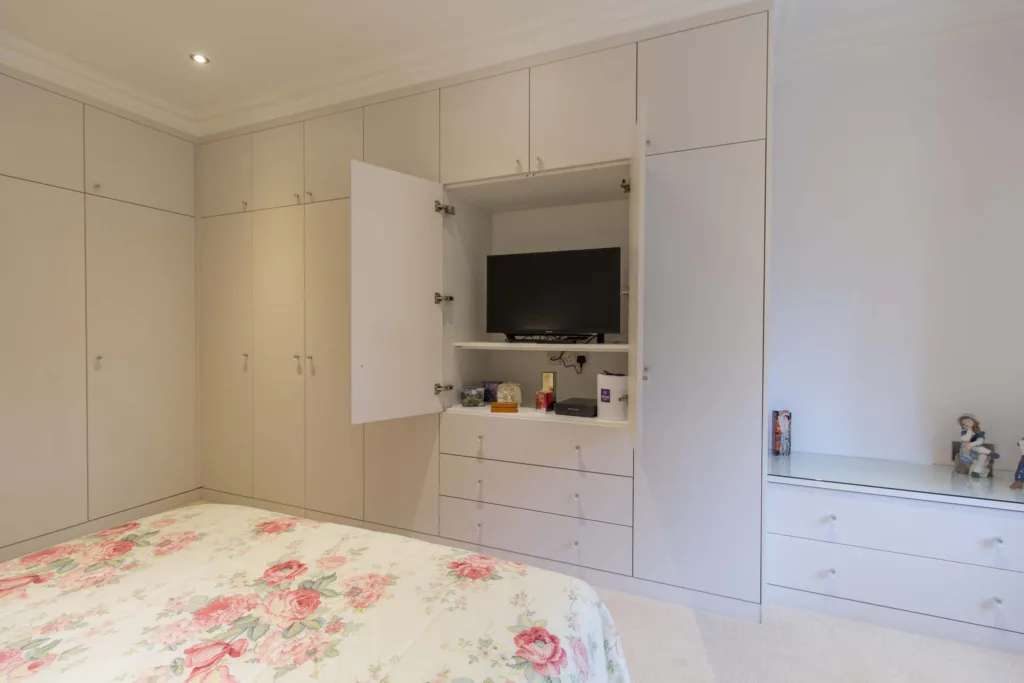
A hinged door needs clear space to swing into. If the bed sits close to the wardrobe, or the wardrobe is beside the bedroom door, that swing can be a daily nuisance. Sliding doors need no space in front at all, which is why they are so popular in narrower rooms.
Measure the gap between the wardrobe front and the nearest piece of furniture. If you can comfortably stand there with a door open, hinged is an option. If not, sliding probably wins.
How you like to get dressed
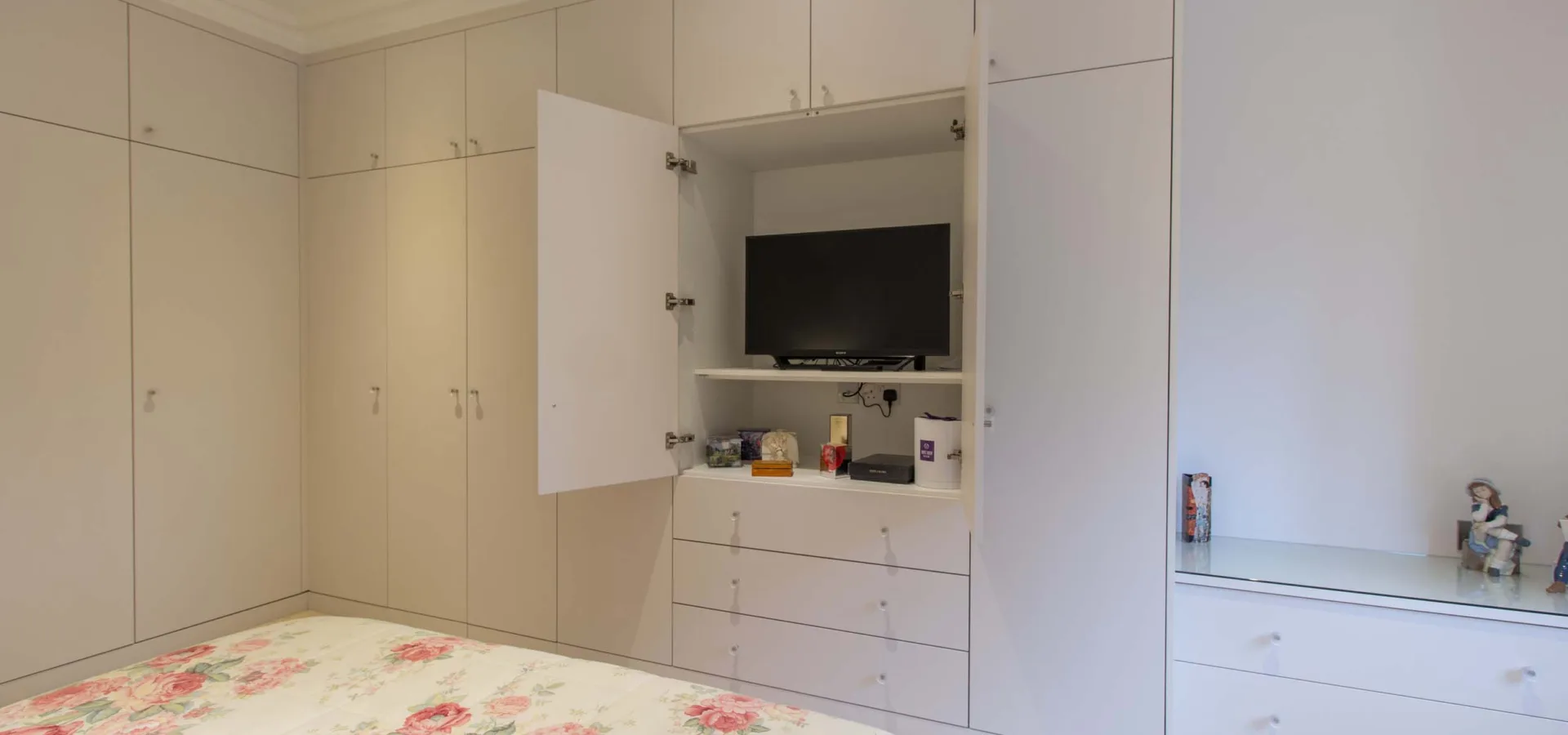
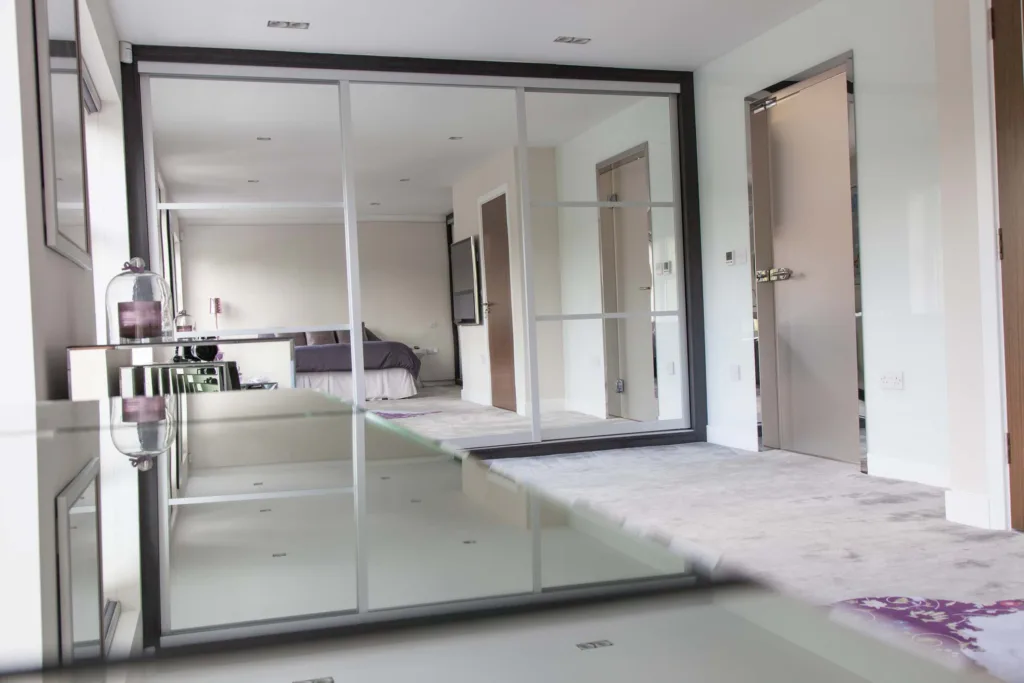
Open a pair of hinged doors and you see everything inside at once. With sliding doors, one door always sits in front of part of the wardrobe, so you see it a section at a time.
Some people never notice. Others find it frustrating, especially if they like to pull an outfit together from different sections. It is worth being honest about which you are.
Depth and what goes inside
Sliding doors run on tracks, one in front of the other, and those tracks take up some of the wardrobe’s depth. In a shallow alcove, hinged doors make better use of every centimetre.
The interior needs planning around the doors too. Behind sliding doors, drawers have to be positioned so they can open fully without catching the edge of a door. Hinged doors give you a bonus: the inside face can carry a mirror, hooks or a tie rail.
Sloping ceilings and awkward corners
This is where hinged doors come into their own. They can be made to follow the angle of a loft ceiling or step around a chimney breast, so the wardrobe fills the whole space. Sliding doors need a straight, level run for their tracks, which makes them a harder fit under a slope. We cover these rooms in more detail in alcoves, chimney breasts and awkward corners.
The look
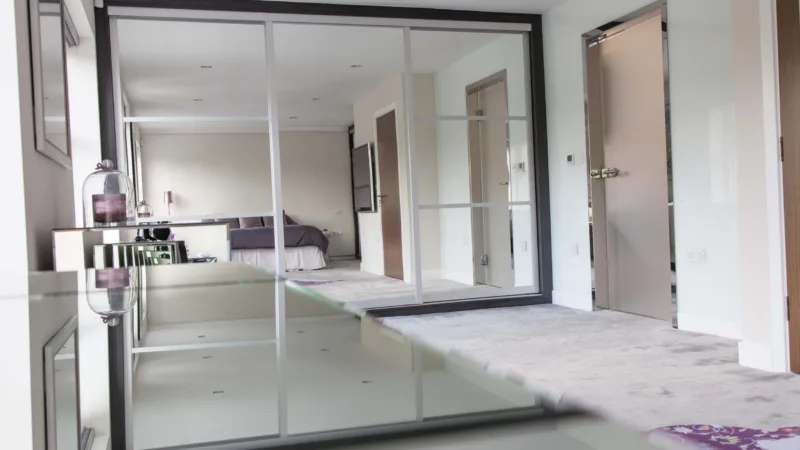
Sliding doors suit a clean, modern room. The panels are large and uninterrupted, and a mirrored or glass panel can make a small bedroom feel much bigger and brighter.
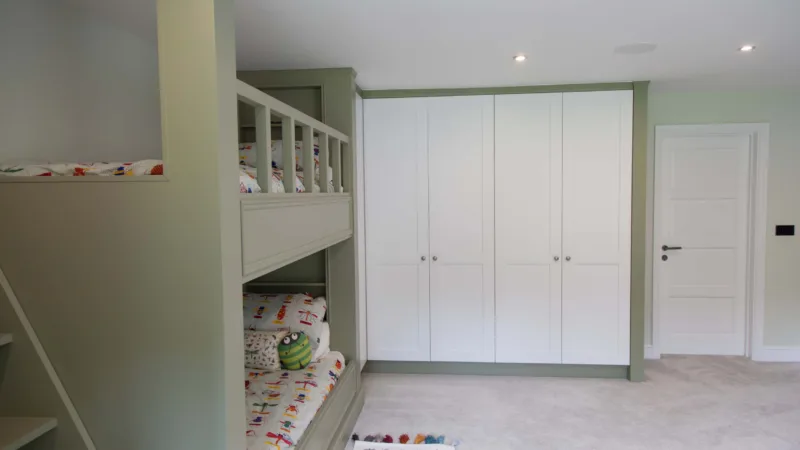
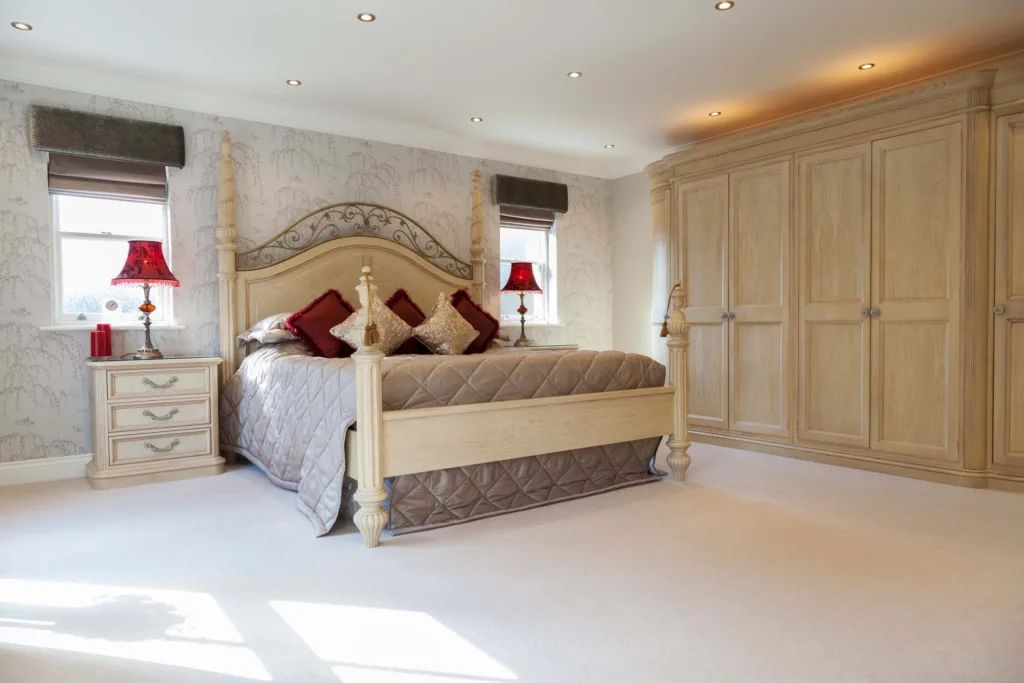
Hinged doors cover a wider range of styles, from plain flat doors to shaker and more traditional panelled designs. If you want the wardrobes to feel like part of a period house, hinged is usually the more natural choice.
You can have both
There is no rule that says one room, one door type. A long wall of sliding doors with a hinged unit in the alcove beside it is a perfectly good answer, as long as the finishes are matched.
If you are still weighing up whether to go fitted at all, start with fitted or freestanding. Then come and try both door types for yourself in our showroom. Opening and closing them is the quickest way to know which you prefer.